
Call : 0485800108 Email: contact@BerryBrush.com.au

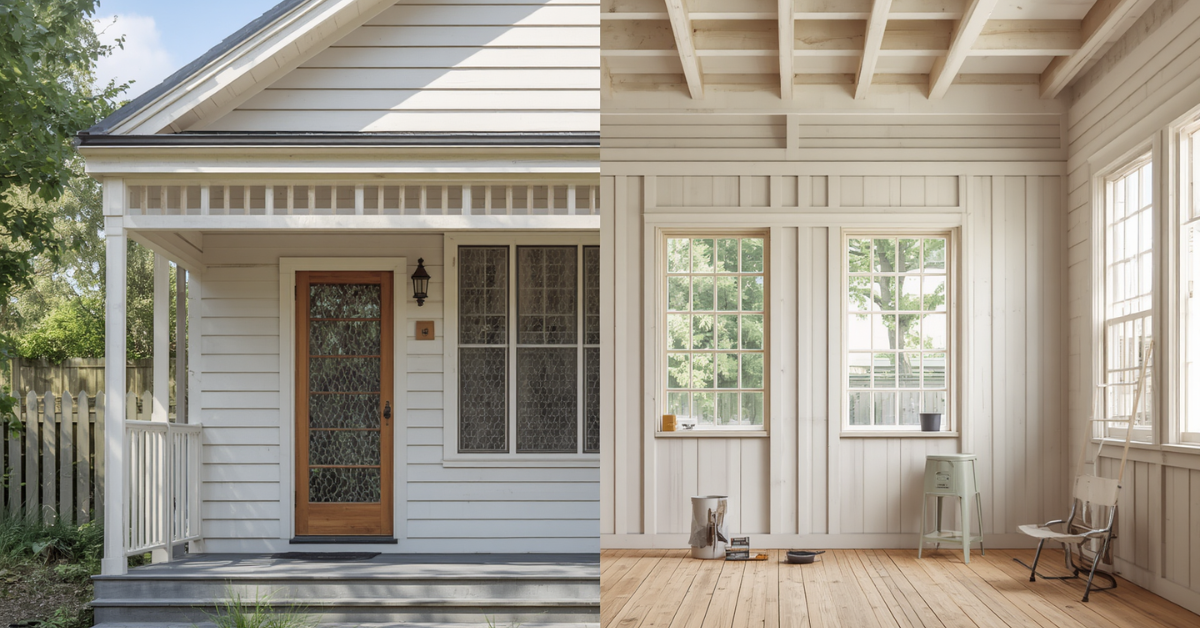

If you have ever painted over timber and seen brown or yellow staining appear through the paint within days or weeks of finishing, you have experienced tannin bleed. It is one of the most common painting problems in older homes with timber framing, weatherboards, and floors across the Shoalhaven.
What Causes It?
Tannins are natural water-soluble compounds found in many Australian hardwoods and softwoods — including species like spotted gum, ironbark, Tasmanian oak, and some varieties of pine. When water-based paint is applied over raw or inadequately sealed timber, the moisture in the paint reactivates these compounds, which migrate through the paint film and appear as brownish or yellowish staining on the surface. Some timber species have much higher tannin content than others, and fresh-cut or recently exposed timber bleeds more readily than old, dry timber. Sources: Wattyl Technical Reference
Common Situations Where It Happens
- New weatherboard replacements on older homes, where fresh timber is exposed
- Painting over previously stained or lacquered timber that was incompletely stripped
- Interior trim and skirtings in homes built from raw hardwood where water-based paints have been applied directly
- Ceiling joints where moisture penetration has exposed timber framing above plasterboard
How to Prevent It
Use an Oil-Based or Shellac-Based Primer
The most reliable prevention for tannin bleed is an oil-based primer or a shellac-based sealer applied directly to the timber before any water-based topcoat. Both products seal the tannins in place before the water in the topcoat can mobilise them. Zinsser BIN shellac primer is the professional standard choice for extreme tannin bleed situations. It is widely available through trade paint suppliers in the Shoalhaven and dries within 45 minutes, making it practical for a primer-topcoat-topcoat sequence in a single day.
[ Screenshot: Tannin bleed staining through water-based paint on timber weatherboards ]
How Many Coats Does It Take?
One of the misconceptions about tannin bleed is that it can be covered with enough coats of standard paint. In practice, tannin bleed is a migration problem, not a coverage problem. A fourth coat of water-based paint over a tannin source produces a fourth bleed-through, because the moisture in each new coat reactivates the tannins regardless of how many previous coats are present. The fix is always the sealing primer first.
Tannin Bleed on Ceilings
Ceiling tannin bleed is common in older Shoalhaven homes where water damage has occurred at some point. Even after a leak has been repaired and the area has dried, tannins from the timber framing above can migrate through the plasterboard and appear as yellow-brown staining through new paint. The cause is tannin mobility in the timber framing, reactivated each time the ceiling is painted with water-based paint. The solution is the same: a shellac or oil-based primer to seal the tannins in place before any water-based topcoat.
What to Do If Bleed Has Already Occurred
- Sand the stained area back to bare timber where practical
- Apply a shellac or oil-based primer
- Recoat with the water-based topcoat once the primer is fully dry
Final Thoughts
Tannin bleed is preventable with the right primer. It is not a product defect or a painting skill issue — it is a substrate management problem that experienced painters anticipate and address during the preparation stage.
Our house painters team primes timber substrates correctly as a standard part of every job. For more on issues in older NSW homes, see our guide on common painting problems in older NSW homes.