
Call : 0485800108 Email: contact@BerryBrush.com.au
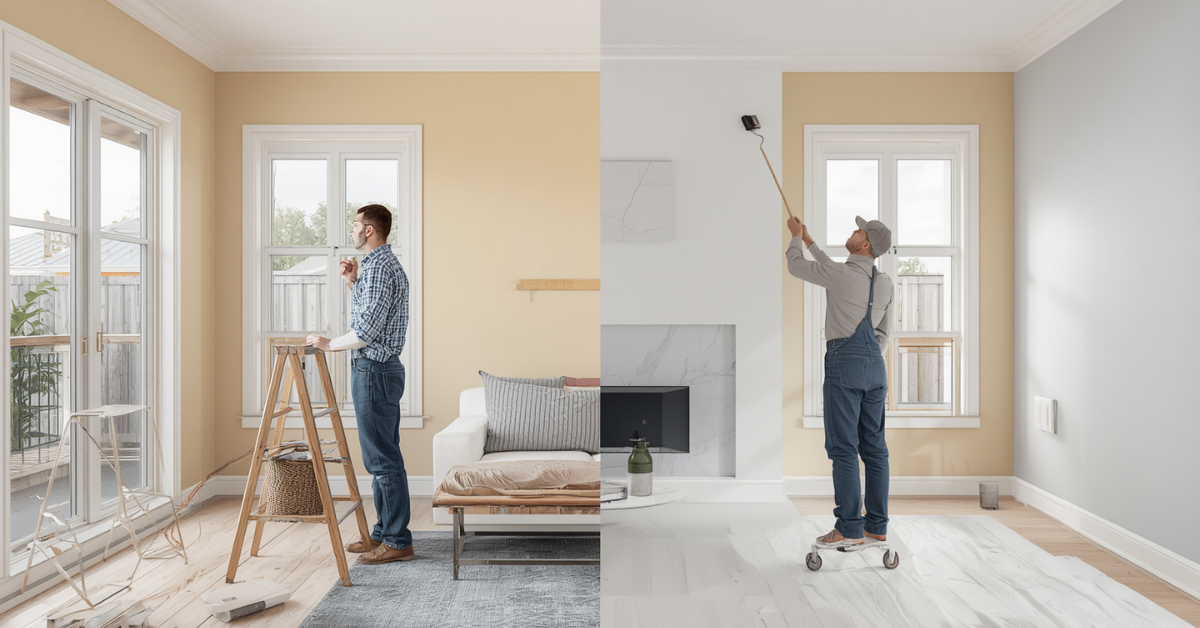

Painting your own home in the Shoalhaven is genuinely achievable for motivated homeowners. But a significant proportion of the professional repaint jobs we quote involve fixing problems that originated with a previous DIY attempt. Understanding the most common DIY painting mistakes before you start saves you from discovering them after the job is supposedly done.
Mistake 1: Skipping Preparation
This is by far the most common. Painting over dirty, greasy, or poorly adhered surfaces is the single biggest reason paint fails prematurely. What looks fine to the eye might be covered in a thin film of kitchen grease, cigarette residue, or chalky old paint that creates a barrier between the new coat and the wall. The industry standard is to clean all surfaces with a sugar soap solution before painting — it is not optional.
Mistake 2: Buying the Wrong Product
Not all paint is interchangeable. Exterior paint used inside can off-gas chemicals unsuitable for enclosed spaces. Interior paint used outside fails quickly due to UV and moisture exposure. Kitchen and bathroom paint contains mould inhibitors that general interior paint does not. Spend five minutes confirming the right product category for each surface before purchasing. Sources: Choice Australia
Mistake 3: Using Too Little Paint Per Coat
A coat of paint spread too thin dries unevenly, shows the underlying colour through it, and lacks the protective film thickness the manufacturer designed the product to achieve. Most interior paints are formulated to cover 12 to 16 square metres per litre. Pushing that to 20 square metres means under-applying the product.
Mistake 4: Not Waiting Between Coats
Two coats of paint are almost always better than one. But the interval between coats matters. Applying a second coat before the first is fully dry traps solvent vapour underneath, causing bubbling, wrinkling, or slow curing. Most water-based interior paints need a minimum of two hours between coats in good drying conditions. In the Shoalhaven’s humid coastal environment, allow three to four hours to be safe.
Mistake 5: Cutting Corners on Masking
Rushed masking leads to paint bleed onto ceilings, trims, glass, and floors. Use quality masking tape — cheap tape is more likely to bleed under the edge. Remove tape while paint is still slightly wet, not after it has fully dried and bonded.
[ Screenshot: Clean masking lines vs rushed masking with bleed-through — comparison photo ]
Mistake 6: Painting in the Wrong Conditions
Paint applied in temperatures below 10 degrees Celsius or above 35 degrees Celsius cures poorly. Painting in direct strong sunlight accelerates drying too quickly, causing lap marks. Painting in high humidity extends drying time and can affect the final finish. In regional NSW, the most reliable painting conditions are mild temperature with low humidity — spring and autumn mornings are typically ideal.
Mistake 7: One Coat Where Two Are Needed
A single coat is almost never sufficient for a complete repaint. Even when coverage looks adequate immediately after application, the colour and sheen of a single coat rarely match the full build that was needed. Two coats is the standard for every surface type in professional painting.
Mistake 8: Not Cutting In Properly Before Rolling
Cutting in — painting the edges and corners with a brush before rolling the main wall area — defines whether a paint job looks professional or amateur from normal viewing distance. Cut in a manageable section, then immediately roll that section before the cut-in edge has dried. This wet-on-wet technique blends the cut-in and rolled areas without leaving a visible ridge where they meet.
Mistake 9: Choosing the Wrong Sheen
A flat paint in a kitchen or bathroom shows every water mark. A high-gloss paint in a bedroom reflects light in a way that feels harsh. General guidance: flat and matte for low-traffic rooms and ceilings; low-sheen for general living areas; satin for kitchens and children’s rooms; semi-gloss for bathrooms and trims; gloss for doors and skirtings.
Final Thoughts
None of these mistakes are difficult to avoid once you know to look for them. The most important ones all come down to preparation and product knowledge.
If your DIY project has not gone to plan, our house painters team handles remediation and professional recoats across Berry and the Shoalhaven. Our residential painters service page covers the full scope of what we do.