
Call : 0485800108 Email: contact@BerryBrush.com.au

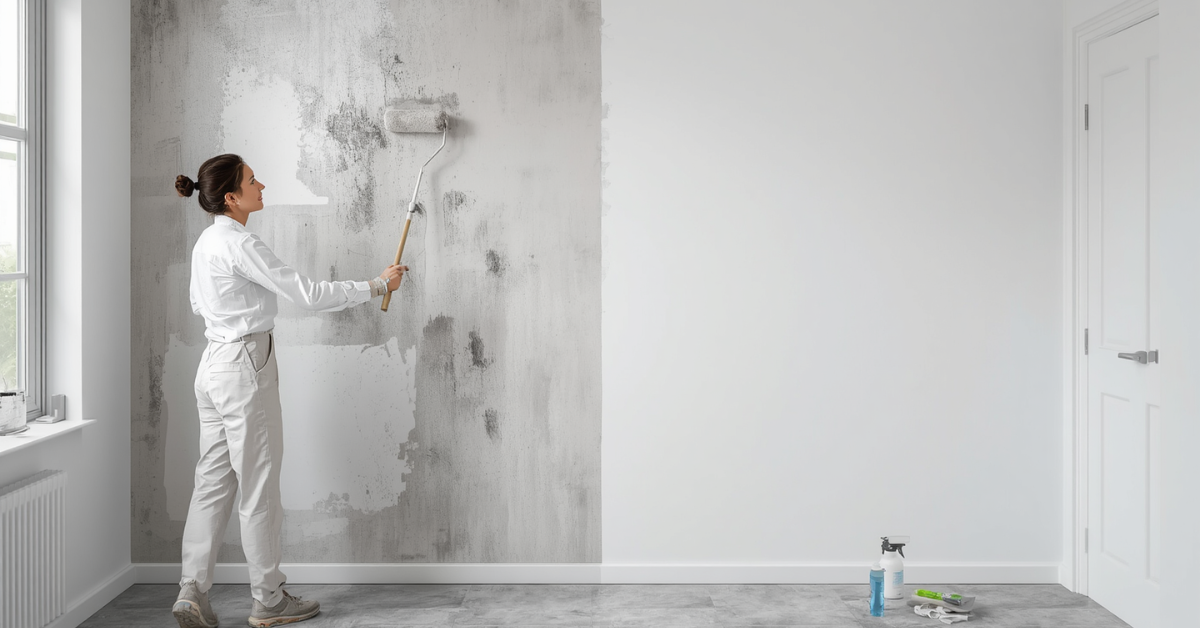

If you have ever had mould come back on a freshly painted wall within a few months, you know how frustrating it is. Anti-mould paint is marketed as a solution, but homeowners often ask whether it genuinely works or whether it is just a higher-priced product that makes the same promise as a regular coat. Here is the honest answer.
What Anti-Mould Paint Contains
Anti-mould paints include fungicidal additives — compounds that inhibit the growth of mould and mildew on the painted surface. Common active ingredients include zinc pyrithione and isothiazolinone compounds, which create a hostile surface environment for biological growth. These are the same types of active ingredients used in anti-dandruff shampoos and many commercial cleaning products — they are genuinely effective. Sources: Australian Paint Manufacturers Federation
Does It Work?
Yes, in the right application. Anti-mould paint does significantly reduce the rate at which mould re-establishes on surfaces in humid environments. However, there are two important limits:
- Anti-mould paint does not remove existing mould. If there is active mould on the surface when you paint, the paint seals it in rather than killing it, and it will return through the coating as the mould continues to grow underneath.
- Anti-mould paint does not fix the moisture source. If a room has condensation from a poorly ventilated shower, an unflued gas heater, or rising damp, the moisture will eventually overwhelm the inhibitors. Fixing the moisture source is a prerequisite for any lasting result.
How Long Anti-Mould Protection Lasts
The fungicidal additives gradually lose effectiveness over time as they are cleaned off or degrade. For interior applications in humid rooms, protection typically remains effective for three to five years under normal cleaning conditions. This aligns well with the natural repainting cycle for high-humidity rooms.
Testing Whether Mould Is Active Before Painting
Apply a drop of household bleach to the affected area. If the discolouration fades within two minutes, it is mould. If it does not fade, it is likely a stain from another source such as rust or water damage. Active mould should be cleaned with a diluted bleach or mould-killing solution and allowed to dry completely before painting over it.
The Ventilation Fix That Makes Everything Else Work Better
No paint product fully compensates for genuinely inadequate ventilation. If your bathroom does not have a working exhaust fan, or if the fan vents into the ceiling cavity rather than outside the building — a common installation error in older NSW homes — mould will return regardless of which paint is applied. An electrician can install a properly ducted exhaust fan in a few hours.
Where It Makes Sense in South Coast NSW Homes
- Bathrooms and ensuites without adequate exhaust ventilation
- Laundries on shaded south-facing walls
- Older homes with ceiling cavities that retain moisture
[ Screenshot: Bathroom wall showing the result of a quality anti-mould paint application ]
Which Products Are Worth Using?
- Dulux Mould Shield — widely available and well-tested in Australian conditions
- Haymes Mould Guard — preferred by many trade painters for durability in high-humidity areas
- Taubmans Kitchen and Bathroom — formulated for steam and moisture resistance with mould inhibitors
Final Thoughts
Anti-mould paint works, but only as part of a complete approach that includes treating existing mould, addressing moisture sources, and maintaining ventilation. Used correctly, it is one of the most practical products available for humid rooms in South Coast NSW homes.
Our interior painters team can advise on the right product for each room. See also our guide on the best interior paint for coastal and humid environments.