
Call : 0485800108 Email: contact@BerryBrush.com.au

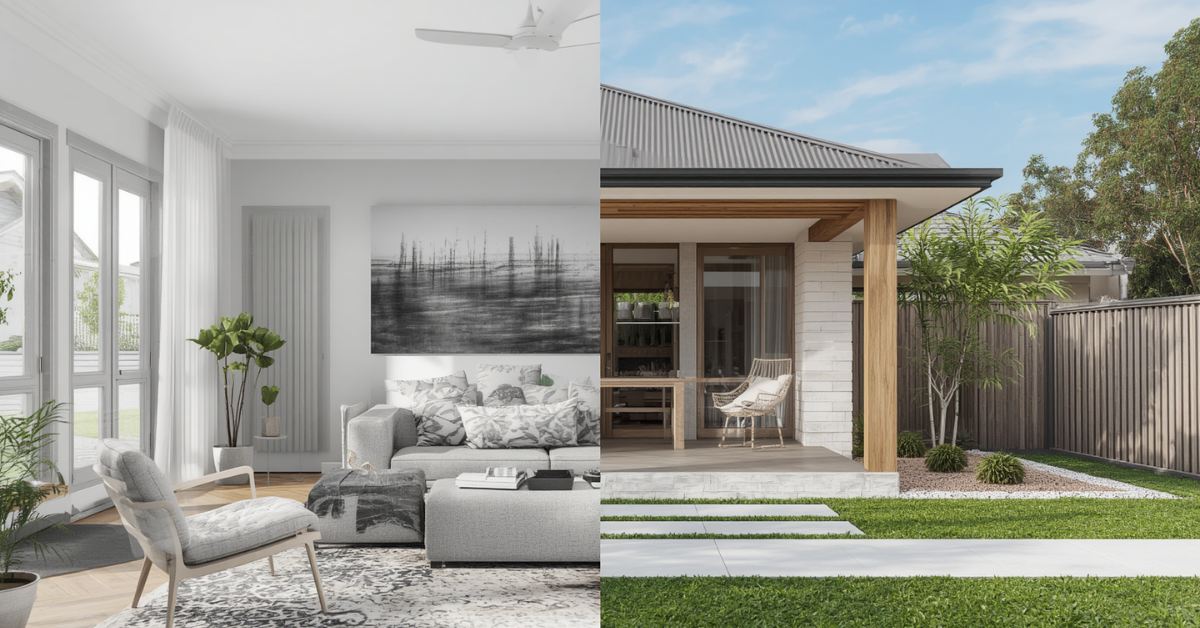

Most homeowners know that interior and exterior paint are different products. Fewer understand exactly why, or what happens when you use one in place of the other.
Why They Are Different
Interior and exterior paints share similar base formulas — most modern versions are water-based acrylics — but their additive packages are tuned for very different environments.
Exterior Paints Are Formulated For
- UV resistance — exterior paint contains pigments and binders designed to resist degradation caused by prolonged sun exposure
- Temperature cycling — exterior paints use more flexible binders that accommodate expansion and contraction as surfaces heat and cool across seasons
- Moisture resistance — exterior formulations repel water more aggressively and resist growth of mould and algae on exposed surfaces
Interior Paints Are Formulated For
- Low VOC emissions — interior paints are designed to off-gas at safe levels in enclosed, less-ventilated spaces
- Scrubbability — most interior ranges are rated for repeated washing without loss of sheen or pigment
- Colour stability under artificial light — interior pigments are optimised for how they look under indoor lighting rather than full UV spectrum daylight
What Happens If You Use Exterior Paint Inside?
Some exterior paints contain higher concentrations of additives that can off-gas for extended periods in an enclosed space. For a short-term DIY project in a well-ventilated room, the risk is relatively low. For a whole-house interior repaint in a home with children or people with respiratory conditions, it is not advisable. Sources: Safe Work Australia
What Happens If You Use Interior Paint Outside?
Interior paint used on exterior surfaces will fade faster than exterior formulations under UV exposure, is more likely to suffer adhesion failure through moisture cycling, and may show algae and mould growth sooner because it lacks the inhibitors exterior paints include. You might not notice the difference in the first six months. By year two or three in the Shoalhaven’s coastal humidity and UV environment, the difference will be obvious.
What Breathable Paint Means and Why It Matters Outside
Many exterior paints are microporous — they repel liquid water but allow water vapour to pass through the paint film. This matters because timber and masonry substrates contain moisture that needs to migrate outward as conditions change. If an impermeable paint is applied over a damp exterior substrate, the moisture trapped behind the film causes blistering and peeling. Interior paints are not formulated for this vapour-permeable behaviour.
A Practical Rule for Ambiguous Situations
For spaces that sit between indoors and outdoors — covered verandahs, protected carport walls, enclosed garages — use exterior products on any surface that will see direct weather at least occasionally. The cost premium for exterior product in these situations is modest and the performance margin in an unexpected wet weather event is significant.
Quick Guide: Which Paint for Which Surface
| Surface | Use |
|---|---|
| Living rooms and bedrooms | Interior low sheen or matt acrylic |
| Bathrooms, laundries and kitchens | Interior kitchen and bathroom paint with mould inhibitors |
| Interior doors and trims | Interior water-based enamel |
| Weatherboards, render and brick outside | Premium exterior acrylic |
| Eaves and covered verandah ceilings | Exterior acrylic (they still see damp and humidity) |
| Garage walls inside | Interior paint if fully enclosed and dry; exterior if exposed to weather |
| Fences and outdoor timber | Exterior acrylic or a dedicated timber stain |
Coastal Conditions Around Berry
Homes around Berry deal with salt air carried inland, strong UV through summer and damp, shaded walls in winter. Those conditions are exactly what exterior paint is built for and interior paint is not. Even a sheltered spot such as a back verandah wall or a laundry with an open door to the yard sees enough humidity and temperature change to justify an exterior product. Our guide on how Berry's coastal climate affects exterior paint goes into more detail.
Frequently Asked Questions
Can I use exterior paint on interior walls?
It is not recommended. Exterior paints contain additives meant for outdoor use and are not designed for enclosed rooms. Use an interior product inside.
Can interior paint be used on a covered patio?
Only if the area is fully enclosed and never wet. Open or partly open patios and verandahs need exterior paint.
Is exterior paint more expensive?
Usually a little more per litre, but using the right product avoids repainting early, which costs far more.
Do I need a different primer outside?
Yes. Use a primer rated for exterior use and suited to the surface: timber, masonry or metal.
Final Thoughts
Use the right paint for the surface. The products exist for good reasons and the performance difference in challenging environments like the South Coast is real and measurable.
Our exterior painters and interior painters teams can advise on the right specification for any surface. See also our guide on how the south coast climate affects exterior paint.