
Call : 0485800108 Email: contact@BerryBrush.com.au

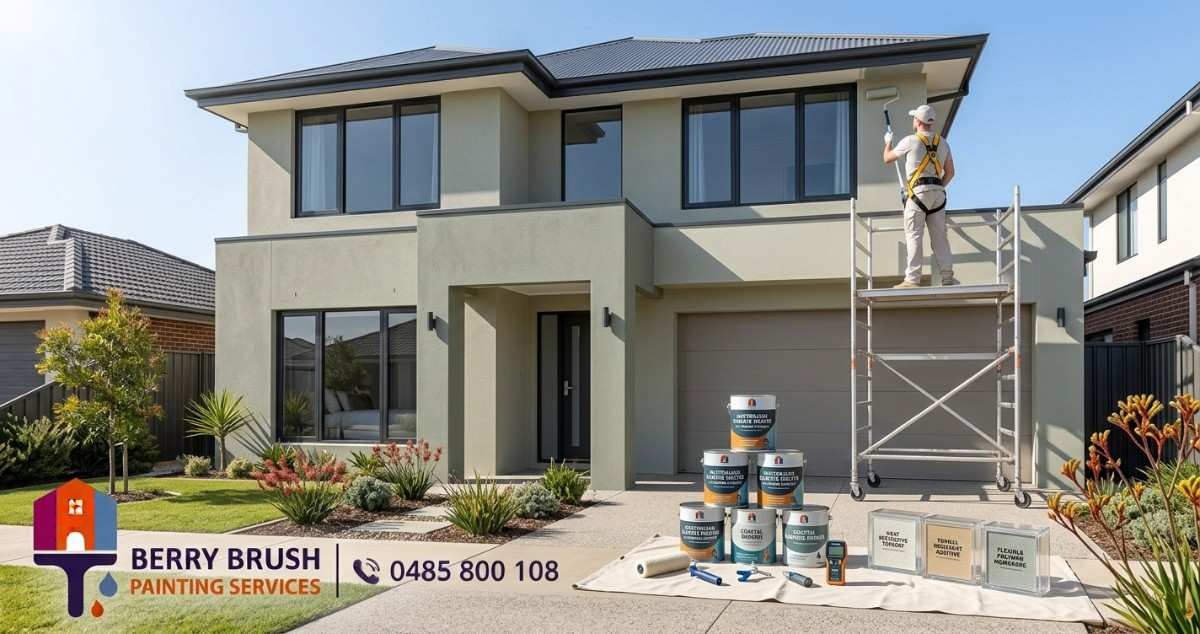

A homeowner in Shoalhaven recently called after watching the paint on their weatherboard home peel away in sheets, just three years after a repaint. Salt-laden sea air off the coast and relentless summer UV had torn through an unsuitable paint system. The fix cost more than the original job.
Choose a 100% acrylic latex paint system with strong UV resistance and film flexibility for Australian conditions. This type of paint expands and contracts with temperature swings, repels moisture, and holds colour under the harsh Australian sun far better than oil-based or cheaper water-based alternatives. The right system also depends on your climate zone, substrate, and the preparation steps that come before the first coat.
This guide covers what Australian weather does to paint, which systems hold up longest, how to prepare surfaces correctly, and which brands perform well across different regions, from the Shoalhaven coast to the dry inland.
—
Effects of Australian Weather on Paint Systems
Australian weather creates conditions that most paints sold globally are not designed to handle. The combination of high UV radiation, wide temperature swings, coastal salt, and seasonal humidity puts paint films under constant mechanical and chemical stress. Understanding what each of these forces does to your paint helps you choose a system built to resist them.
UV Radiation and Thermal Shock Challenges
Australia receives some of the highest UV radiation levels in the world, according to the Australian Radiation Protection and Nuclear Safety Agency. UV radiation breaks down the binder in a paint film, causing chalking, fading, and surface cracking over time. On a dark-coloured roof or wall in Nowra on a January afternoon, surface temperatures can exceed 70°C and drop to below 15°C overnight. That 55°C swing creates thermal shock: the substrate expands and contracts, and any paint film that cannot flex with it will crack or delaminate.
Timber substrates are the most vulnerable to this cycling. A rigid paint film, such as an alkyd oil-based product, becomes brittle as the binder hardens with age. Once cracking begins, water enters the substrate and the paint lifts from below, accelerating deterioration well beyond what UV alone would cause.
Humidity Mould Risks and Coastal Salt Exposure
Properties within a few kilometres of the Shoalhaven coastline, including areas like Callala Bay, Culburra Beach, and Shoalhaven Heads, face a compounding problem: salt-laden air deposits chloride particles on exterior surfaces. Chlorides draw moisture to the paint film surface and accelerate corrosion on metal substrates. On masonry and render, they contribute to efflorescence, where soluble salts migrate through the paint and push the film away from the wall.
High ambient humidity, common through summer across coastal NSW, also creates conditions where mould and mildew spores colonise paint surfaces. A paint system without an in-built mould inhibitor will show black or green spotting within twelve months in these conditions, even on freshly painted surfaces. Choosing a system rated for high-humidity and coastal exposure is not optional in these areas: it is the starting point.
—
Why 100% Acrylic Latex Excels in Australian Conditions
100% acrylic latex is the most appropriate exterior paint technology for Australian residential and commercial surfaces. The acrylic polymer binder resists UV degradation longer than vinyl acrylic or alkyd binders, and the latex formulation remains permeable to water vapour while blocking liquid water. This breathability matters on older homes where moisture moves through walls from the inside out.
UV Resistance and Flexibility Benefits
The acrylic polymer chain in a quality 100% acrylic product maintains its bond with the substrate across a wide temperature range. Where an alkyd paint hardens and cracks after three to five years of Australian summers, a 100% acrylic film retains its elasticity for considerably longer. This flexibility prevents the micro-cracking that lets water in, which is the primary mechanism behind most paint failures on Australian exteriors.
Colour retention is another practical difference. Quality 100% acrylic formulations contain UV-stable pigments that resist chalking and fading far better than lower-grade products. On a home in Berry or Bomaderry, where the front elevation faces north and receives direct sun through most of the day, the difference between a quality acrylic and a budget vinyl acrylic product becomes visible within two to three years.
Humidity Mould Protection Performance
Premium 100% acrylic products include registered mould inhibitors that remain active within the dry paint film for years after application. These inhibitors do not wash off in rain the way surface-applied fungicides do. When painting in coastal or high-humidity zones, look for products that specifically state mould and mildew resistance on the technical data sheet, not just on the marketing label.
The breathability of 100% acrylic also reduces the risk of blistering caused by moisture vapour pressure. On rendered masonry walls common across the Shoalhaven region, trapped moisture will push through a non-breathable paint film and cause blistering. A breathable acrylic system allows vapour to pass through the film without damaging it, protecting both the coating and the wall behind it.
—
Oil-Based vs Water-Based Paints for Local Climates
The shift away from oil-based paints in Australian residential painting has been ongoing for two decades, and the weather performance data supports it. Water-based acrylic systems outperform oil-based alkyds in UV resistance, flexibility, and mould resistance on most exterior substrates in the Australian climate. Oil-based products still have a role, but it is a specific one.
Durability Comparison in Extreme Weather
| Substrate | Oil-Based (Alkyd) | Water-Based Acrylic |
|---|---|---|
| Timber weatherboards | Becomes brittle, cracks within 5 years | Remains flexible, typical lifespan 8-12 years |
| Render/masonry | Blocks vapour, blistering risk | Breathable, lower blistering risk |
| Metal (gutters, roofing) | Good initial adhesion, prone to rust under film | Requires specific metal primer, long-term performance good with correct system |
| Previously oil-painted surfaces | Direct adhesion possible with preparation | Requires thorough cleaning and priming |
Oil-based products still perform well on interior timber trims and doors, where flexibility is less of a concern and a hard, washable finish is the priority. On exterior surfaces exposed to Australian sun, the inflexibility of aged alkyd films creates more maintenance cost over a ten-year period than the initial paint savings justify.
Application and Maintenance Differences
Water-based acrylics dry faster, which matters in the field. A painter working in the Shoalhaven area through summer can apply two coats in a single day with a quality water-based product. Oil-based products require twelve to twenty-four hours between coats, which extends project time and increases the risk of dew or morning humidity affecting the uncured film overnight.
Cleaning up water-based products requires soap and water. Oil-based cleanup requires solvent, which adds cost and waste disposal considerations. From a maintenance perspective, water-based surfaces can be touched up without the adhesion problems that often occur when applying new oil-based product over aged, chalking oil-based paint.
—
Essential Surface Preparation for Australian Conditions
No paint system performs to its rated lifespan on a poorly prepared surface. Preparation accounts for the majority of paint failures seen on Australian homes, and this is consistent with what experienced painters observe across Shoalhaven properties. A quality paint applied over a dusty, oily, or poorly primed surface will fail prematurely regardless of its technical specifications.
Cleaning and Repair Steps
Start with a pressure wash to remove salt deposits, dirt, mould, and loose paint. In coastal areas like Culburra Beach or Callala Bay, salt accumulation on exterior walls can be heavy enough to compromise adhesion if not fully removed. Allow the surface to dry completely: on masonry, this can take two to three days after washing before moisture readings reach an acceptable level for painting.
Fill all cracks and holes with an appropriate filler matched to the substrate. Flexible fillers suit timber; rigid cement-based fillers suit masonry. Sand back all repaired areas and any existing paint edges that have lifted or are feathering. A common mistake is painting over the sharp edges of peeled paint areas, which creates a visible ridge and a point where moisture can re-enter. Feathering those edges before priming removes the problem at source.
DIY timing note: In the Shoalhaven region, August and September offer reliable painting windows. Temperatures sit between 12°C and 22°C, humidity is moderate, and rainfall is lower than in summer. Avoid painting on days when rain is forecast within 24 hours or when surface temperature is below 10°C or above 35°C.
Priming for Weather Resistance
A primer matched to the substrate and the topcoat system is not an optional step. On bare timber, a wood primer seals the grain and provides a stable base for the topcoat to bond to. On masonry, an alkali-resistant primer prevents the alkali salts in fresh or old render from attacking the acrylic binder in the topcoat. On metal, a corrosion-inhibiting primer is the only thing standing between the steel and rust formation under the paint film.
Using the topcoat directly on an unprimed surface reduces the bond strength and the lifespan of the entire system. A three-coat system, consisting of primer, undercoat, and topcoat, consistently outperforms a two-coat system applied without proper priming, particularly in coastal and high-UV zones.
—
Regional and Substrate-Specific Paint Recommendations
Australia’s climate zones require different paint system specifications. A product rated for tropical conditions in Darwin handles UV and humidity well but may be unnecessary for a property in Adelaide. A coastal NSW specification addresses salt and humidity but differs from what a property in alpine Victoria requires.
Shoalhaven Coastal Systems
Properties in the Shoalhaven region face a specific combination: moderate-to-high UV, coastal salt exposure, summer humidity, and winter moisture. The recommended exterior system for this area uses a 100% acrylic exterior topcoat with a stated salt resistance and mould inhibitor, applied over a substrate-appropriate primer.
For weatherboard homes common in Berry, Bomaderry, and the surrounding villages, the system should be:
- Substrate preparation: Pressure wash, spot repair, sand and feather edges
- Primer: Water-based wood primer on bare timber; oil-based wood primer on heavily weathered or resinous timber
- Topcoat: 100% acrylic exterior with UV resistance and mould inhibitor, minimum two coats
For rendered masonry, swap the timber primer for an alkali-resistant masonry sealer. For colourbond fencing or metal roofing, use a direct-to-metal primer rated for salt exposure before applying the topcoat.
Comparisons for Melbourne Adelaide and Northern Australia
| Region | Key Climate Stress | Recommended System |
|---|---|---|
| Shoalhaven/Coastal NSW | Salt, UV, humidity | 100% acrylic, salt-rated, mould inhibitor, vapour-permeable |
| Melbourne/Southern Victoria | Temperature cycling, rain | 100% acrylic, flexible, moisture-resistant, breathable |
| Adelaide/SA | Extreme heat, dry periods | 100% acrylic with high heat tolerance, light-reflective pigments |
| Northern Australia (QLD/NT) | Tropical UV, monsoonal humidity | 100% acrylic with anti-fungal, high UV rating, moisture barrier primer |
| Alpine regions | Freeze-thaw cycling, snow | Flexible 100% acrylic, premium moisture exclusion, no oil-based |
The substrate differences across these regions also matter. Homes in the Northern Territory frequently use fibre cement sheet, which requires a specific sealer coat. Brick homes in Melbourne typically need a masonry primer before any acrylic topcoat to prevent alkalinity damage to the film.
—
Brand Recommendations and Maintenance for Longevity
Choosing the right brand and product line matters as much as the paint chemistry. Not all 100% acrylic products are equal in quality, and the Australian market includes several manufacturers who specifically formulate for local conditions.
Dulux Haymes Wattyl Options
Dulux Weathershield is one of the most used exterior systems for residential painting across coastal and UV-exposed zones in Australia. The product line includes substrate-specific primers and topcoats rated for salt exposure and high UV. For properties in areas like Nowra or Shoalhaven Heads, Dulux Weathershield Maximum in a 100% acrylic formulation provides strong UV resistance and colour retention.
Haymes Paint produces products specifically formulated for Australian conditions. The Haymes Solashield range uses heat-reflective pigment technology that reduces surface temperature on dark-coloured walls, which directly reduces the thermal stress that causes paint film failure. For homeowners in the Shoalhaven area choosing medium to dark exterior colours, this technology extends the service life of the coating.
Wattyl offers the Solagard range, which is suited to coastal and high-humidity environments. Wattyl Solagard includes a mould inhibitor and is formulated for the temperature and humidity cycling common in coastal NSW. It is available in both low-sheen and semi-gloss finishes, with low-sheen preferred for rendered walls and semi-gloss used on trims and doors.
Inspection and Repainting Timeline
| Paint System | Expected Lifespan | Inspection Trigger | Repainting Interval |
|---|---|---|---|
| Premium 100% acrylic (coastal) | 8-12 years | Chalking, fading, cracking | Every 8-10 years |
| Mid-grade acrylic | 5-8 years | Peeling, mould growth | Every 5-7 years |
| Budget vinyl acrylic | 3-5 years | Fading within 2 years, peeling | Every 3-4 years |
| Oil-based alkyd (exterior) | 4-6 years | Cracking, brittleness | Every 4-5 years |
Annual visual inspections catch problems before they become costly. Walk around the exterior after winter and check for mould growth in sheltered areas, paint lifting around window frames, and any cracking on render or caulking. Addressing these early, with spot preparation and touch-up painting, extends the life of the full system and defers the cost of a complete repaint.
Coastal properties require inspection twice yearly: once after summer (salt accumulation and UV exposure) and once after winter (moisture damage and mould growth in shaded areas).
—
Why Choose Berry Brush for Your Next Paint Project
Berry Brush is a locally owned and operated painting company based in Berry, NSW, with 11+ years of experience across residential and commercial painting projects in the Shoalhaven and Southern Highlands regions.
- 11+ years of local experience across Berry, Nowra, Bomaderry, Shoalhaven Heads, and surrounding areas
- Fully licensed and insured, providing professional service and peace of mind
- Free on-site quotes with no obligation, so you understand the scope and cost before committing
- Fixed-price quotes with no hidden costs or surprises at the end of the job
- Written workmanship guarantee on all painting projects
- Thorough surface preparation including filling, sanding, and priming before any paint is applied
- Premium quality paints using products from trusted Australian brands with low-VOC options available
- Local knowledge of Shoalhaven weather patterns, salt exposure zones, and the substrates common to local homes
Contact Berry Brush at 0485 800 108 or contact@BerryBrush.com.au for a free on-site quote.
—
Frequently Asked Questions
What is the best type of paint for Australian weather?
A 100% acrylic latex exterior paint is the best choice for Australian weather conditions. It resists UV radiation, stays flexible through temperature swings, repels moisture, and holds colour for longer than oil-based or vinyl acrylic alternatives. For coastal areas, choose a product that specifically states salt resistance and includes a mould inhibitor in the formulation.
How do I choose paint for humid conditions?
Select a 100% acrylic paint that includes a registered mould inhibitor within the dry film, not a surface-applied fungicide. Check the technical data sheet for stated mould and mildew resistance. In high-humidity zones such as coastal NSW, also choose a vapour-permeable formulation to prevent moisture-driven blistering on masonry or rendered walls behind the paint film.
What should I consider when painting in Australia?
Consider your climate zone, the substrate material, UV exposure, proximity to the coast, and the time of year you plan to paint. Australian conditions require UV-resistant, flexible paint systems applied over properly primed and prepared surfaces. Avoid painting in temperatures below 10°C or above 35°C, and check that no rain is forecast within 24 hours of application.
How can I protect my paint from UV damage in Australia?
Choose a 100% acrylic topcoat with UV-stable pigments and a stated UV resistance rating. Lighter colours reflect more solar radiation and experience less thermal stress than dark colours. For properties that use medium to dark exterior colours, heat-reflective pigment technology, available in products like Haymes Solashield, reduces surface temperature and slows UV-driven paint film degradation.
What paint lasts longest in Australian conditions?
Premium 100% acrylic exterior paint applied over a properly prepared and primed surface lasts the longest in Australian conditions. On coastal properties with correct surface preparation, primer, and a quality acrylic topcoat, a repaint should be expected to last eight to twelve years before another full repaint is needed, subject to annual maintenance inspections.
What paint system works best for coastal salt exposure?
A salt-rated 100% acrylic exterior system with a corrosion-inhibiting primer on metal substrates and an alkali-resistant sealer on masonry performs best in coastal salt exposure zones. Products like Dulux Weathershield and Wattyl Solagard are formulated for these conditions. Thorough washing of salt deposits before application, and twice-yearly inspections after the job is done, extend the system’s service life.
—
Make Your Paint Work Harder Against Australian Weather
Selecting the right paint system for Australian weather comes down to matching the product chemistry to your specific climate zone, substrate, and exposure conditions. A 100% acrylic latex system with UV resistance, film flexibility, and a mould inhibitor covers the majority of Australian residential and commercial requirements, and it outperforms cheaper alternatives over any ten-year period.
If your Shoalhaven property is due for a repaint or showing early signs of paint failure, contact Berry Brush for a free on-site quote. Our team brings 11+ years of local experience to every project and uses premium paints with a written workmanship guarantee. Call 0485 800 108 or email contact@BerryBrush.com.au to get started.
—